

Designing the First Chapter

Identity + Utility
From Brand System to Product Reality

Align the Vision
Defined the product and brand in parallel, aligning on audience, value proposition and long-term ambition. This created a shared foundation to guide both identity and experience from day one.

Build the system
Developed a flexible design system that unified brand and product, from visual language to core UI components. This ensured consistency while enabling rapid iteration.

Design + Ship
Applied the system to the first product iteration, designing key flows and bringing the experience to life. Close collaboration with engineering kept ideas grounded and moving quickly.

Learn + Evolve
Used early feedback and real usage to refine both the product and brand. Each iteration strengthened the system, improving clarity, usability and overall cohesion.

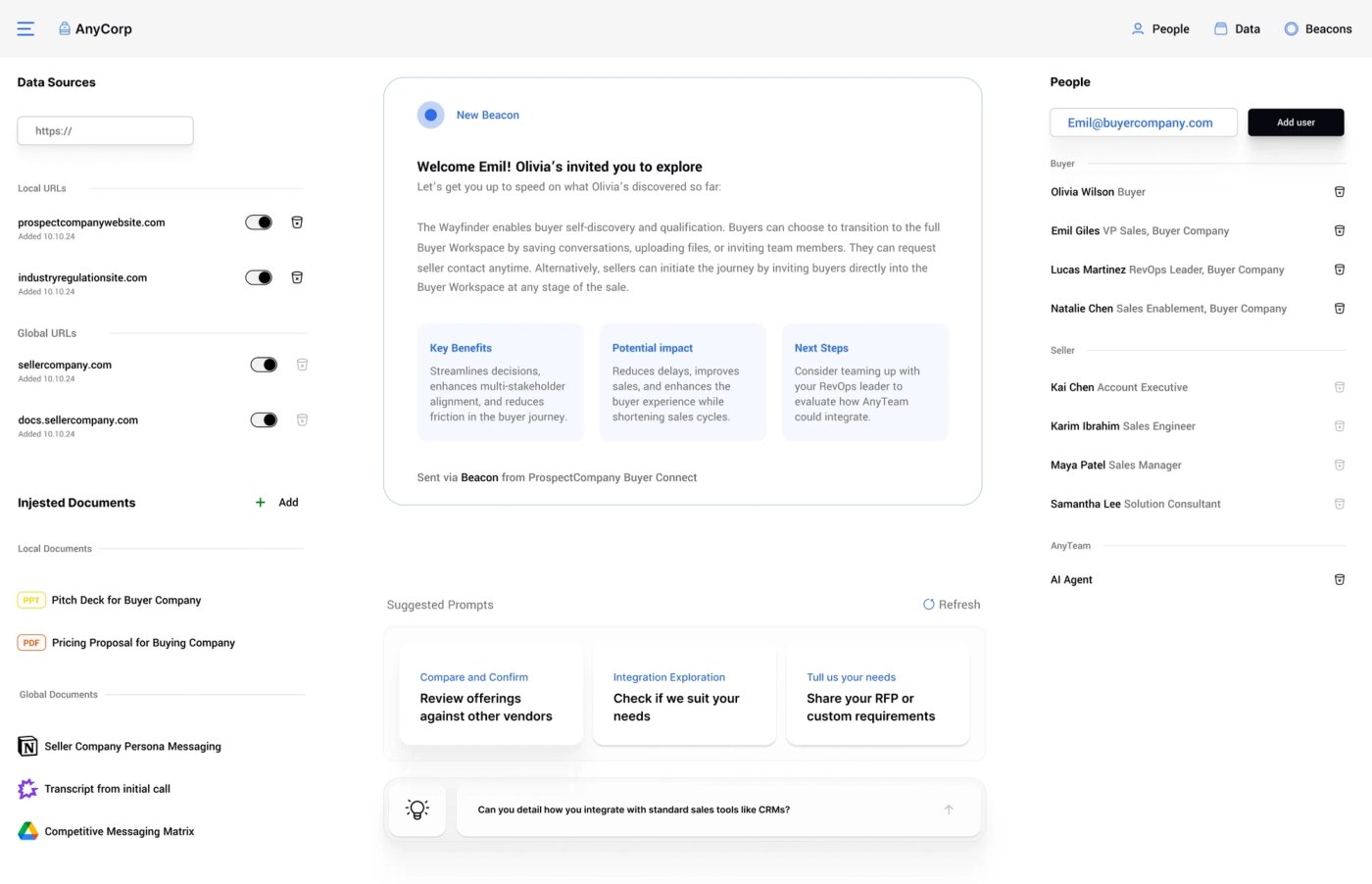
Initial system UI
Rooted in exploration
Using the language and imagery of exploration brought a human layer to an otherwise technical AI experience. References to discovery, navigation and journey reframed complex systems as something intuitive and approachable, helping users feel oriented rather than overwhelmed. This balance of metaphor and function made the product feel less like a tool and more like a guide, grounded in real-world understanding.
A new twist on notifications
Beacons transformed notifications into purposeful signals rather than interruptions. Instead of generic alerts, they act as moments of guidance, surfacing what matters most and helping users navigate the experience with clarity and confidence.
Not another chatbot
WayFinder reframed the chatbot from a reactive tool into a proactive guide. By giving it a clear role and personality, interactions felt more like guided discovery than command and response, making the experience more intuitive and human.


The real climb begins
- $0M
- Series A Funding
- 0
- Employees
- 0
- Design system components